- inBachs
- Posts
- inBachs / Video Across Marketing Channels & Customer Journey
inBachs / Video Across Marketing Channels & Customer Journey
A summary from our NAMM presentation

Isak Peterson
February 04, 2026
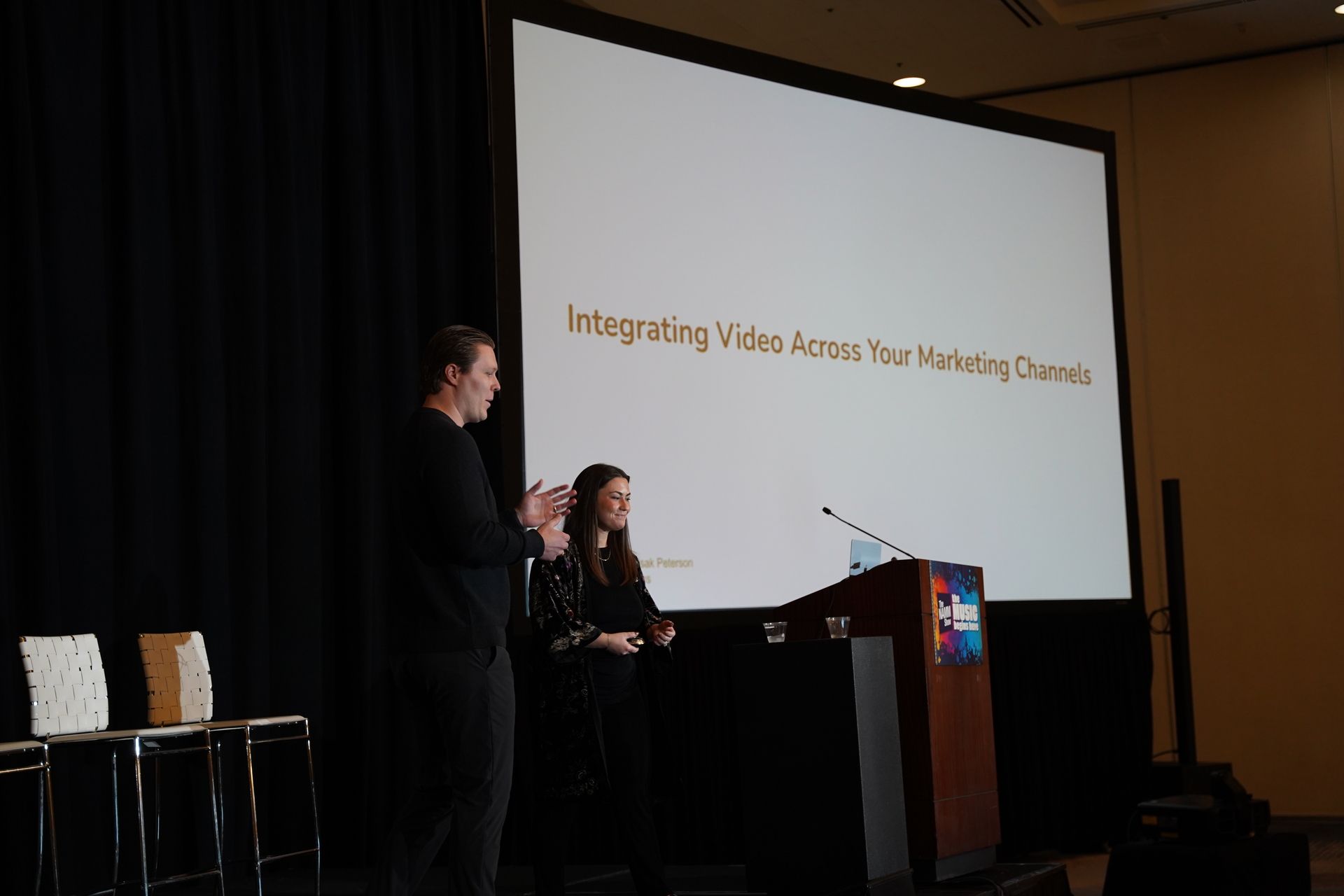
Here’s a summary from The NAMM Show educational session put on by Kelly Riordan & Isak Peterson of Outside The Bachs:
Kelly:
Hi everyone, good afternoon. Today we’re talking about integrating video across your marketing channels, but we want to go much deeper than that.
This session isn’t just about marketing. It’s about how video can be used across your entire customer journey to build strong relationships with consumers, retailers, and manufacturers.
Isak:
We also want to be respectful of your time. We know you’ve got booths, meetings, and a lot happening on the show floor, so our goal is to be practical and efficient while still giving you ideas you can actually use.
Why Video Matters Beyond Marketing
Kelly:
Your ability to clearly articulate what you offer and the value behind it doesn’t just impact sales. It also affects retention, loyalty, and the long-term relationships you build.
Video gives you the opportunity to show more than outcomes. It helps you communicate tone, credibility, and trust.
Isak:
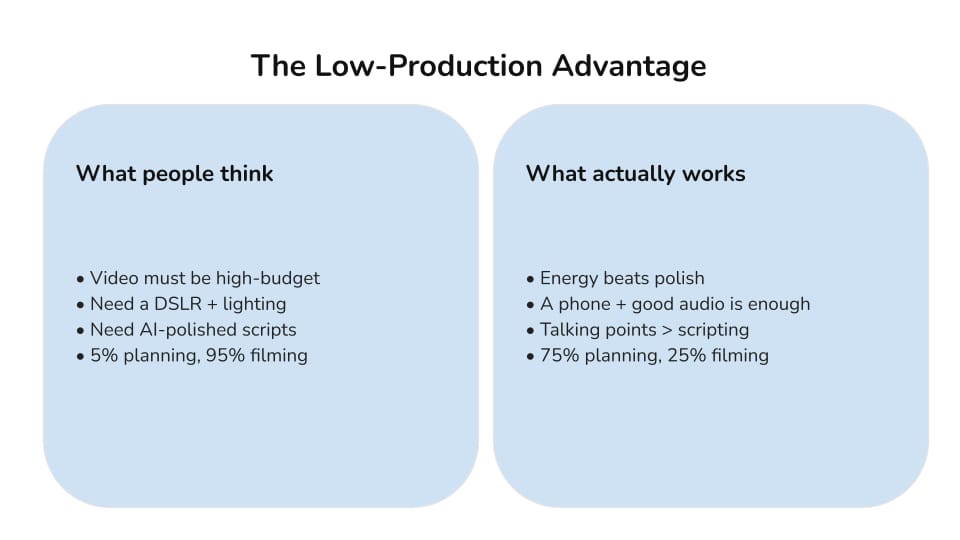
And one thing we’ve seen consistently is that video doesn’t need to be high production to work. In fact, low-production video often performs better because it feels real.
Highly polished content can feel distant. Niche, slightly imperfect video tends to feel more human, and that matters more than production quality.
Kelly:
Especially as AI-generated content becomes more common, being visibly human is a real advantage. Video allows you to show passion, opinions, and energy, and that’s what people connect with.
“Authenticity” Means Real Life & Human
Kelly:
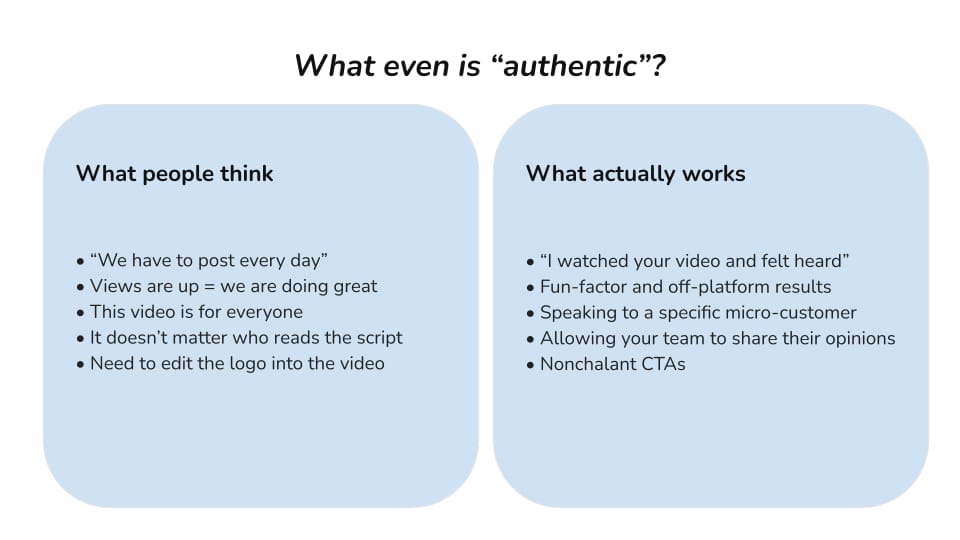
Authenticity is one of the most overused words in marketing, so let’s define it more clearly.
Authentic marketing reflects real life and real conversations.
If you’re creating content in a vacuum and trying to force relevance, it’s always going to feel disconnected.
Isak:
A simple gut check we like to use is the fun factor. Did you enjoy making the video, and does it feel enjoyable to watch?
That energy shows up on camera more than people realize. If you’re bored making it, people will feel that.
Kelly:
You don’t need to post every day. You don’t need multiple videos a day. Consistency does not mean constant.
What matters is whether your content makes people feel seen, heard, and understood.
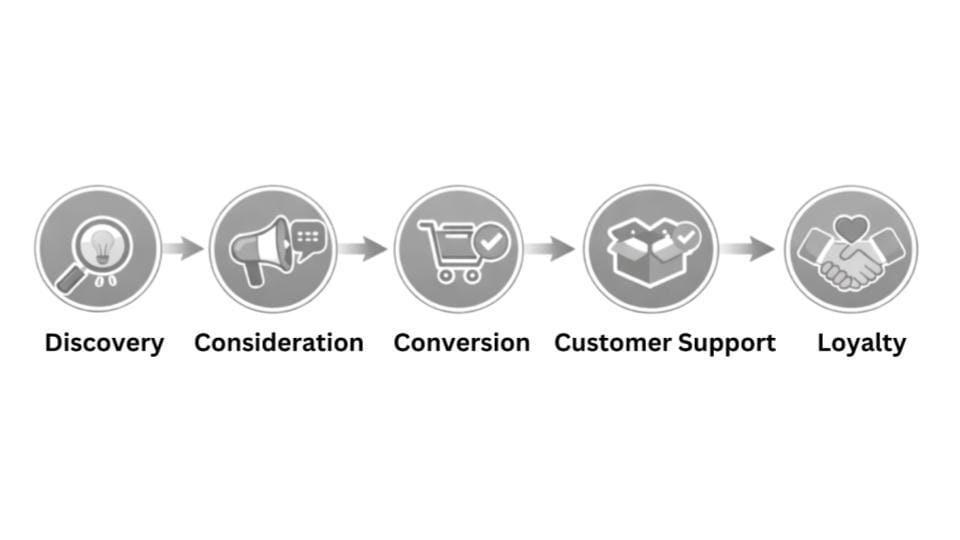
The Phases We Use For “Customer Journey”
Let’s start with discovery:
Discovery and How People Actually Scroll
Isak:
Scrolling is emotional. People scroll when they’re bored, stressed, distracted, or just looking for something to break up their day.
They’re not scrolling because they want to buy something. They’re scrolling because they want to feel something or learn something.
Kelly:
That’s why discovery content shouldn’t try to appeal to everyone. Niche content works incredibly well.
Specific stories feel intentional. When someone feels like a video was made for them, they stop scrolling.
Isak:
And that moment, when someone stops scrolling, is everything. That’s when you move from being background noise to being someone they actually want to hear from.
Stop Leading With Your Logo
Isak:
A question I get a lot is whether you need to include your logo or brand name in your videos.
Most of the time, you don’t. People are smart. If they’re interested, they know how to follow you or learn more.
Kelly:
This is especially important if you’re working with influencers or creating branded content.
Think twice about putting your brand name or logo in the first five seconds of a video. Educated consumers can sense an ad immediately, and they scroll right past it.
Isak:
Think about real conversations. People don’t lead with brand names. They lead with outcomes and experiences.
Marketing works better when it mirrors how people actually talk to each other.
The Shift Away From Ultra-Short Content
Kelly:
A few years ago, seven-second videos were the gold standard. That’s changed significantly.
Platforms like TikTok and Instagram are increasingly used more like podcasts. People listen while getting ready or doing other things.
Isak:
Longer content gives you more room to build trust. It doesn’t have to be perfect, and honestly, it probably shouldn’t be.
If you try to make everything flawless, it starts to feel stiff and overproduced.
Kelly:
TikTok allows up to 10-minute videos. Instagram Reels allow up to three minutes.
Instead of ten seven-second videos, create one strong 60 to 90 second video that tells a complete story.
Consideration and Turning Interest Into Trust
Kelly:
Once someone discovers you, they often follow your account, save content, and binge multiple videos.
At this stage, they’re actively deciding whether they trust you.
Isak:
This is where long-form content really shines. On our website outsidethebachs.com we highlight our case studies, interviews, and deeper conversations help people understand what it’s actually like to work with us.
They’re not just learning what you do. They’re envisioning what it would be like to work with you (or buy your product) and get results.
Kelly:
Longer interviews work well on platforms like YouTube or podcast feeds, but their real purpose is moving people from consideration to conversion. We have had success choosing case studies that have similar characteristics to our prospects and including these links in our follow up emails. Effective interviews cover where someone started, the problem they were facing, what changed, and the results they achieved.
Clipping Is a Skill
Isak:
Turning long-form content into short clips is harder than it looks. It’s a real skill, and entire teams specialize in it.
If you’re early in your content journey, it’s okay not to do this yet.
Kelly:
Instead of clipping a long interview, ask clients to record a 60 to 90 second face-to-camera testimonial with one clear story and one clear outcome.
Create content with the platform in mind instead of trying to make one piece work everywhere.
Conversion and Videos That Make People Take Action
Kelly:
Video doesn’t stop at marketing. Video can be used in inquiry follow-ups, sales emails, and meeting preparation. We are really liking using Videoask to attach video to our lead generation forms. Asking for someone’s data is a tough ask and we look for ways to make the process feel more human.
Isak:
When someone books a call, small things like a short video, a clear agenda, or relevant examples help them feel more comfortable before they ever meet you. That comfort matters a lot more than people think.
Video for Customer Support and Loyalty
Kelly:
Video is also powerful for customer support, FAQs, onboarding, and introducing team members. A video response feels more empathetic than text, especially when someone is already frustrated.
Isak:
We like using Loom as a video tool to help us with customer success. When people can see a face and hear a voice, it reminds them there’s a real human on the other side. That changes how people interact with your brand and how loyal they become over time.
Final Takeaways
Kelly:
You don’t need expensive equipment. You don’t need perfect scripts. You don’t need daily content.
Isak:
What you do need is energy, alignment, and a real human presence.
Kelly:
As AI-generated content increases, being visibly human could become an advantage.
Isak:
Use video not just to sell, but to build relationships, trust, and loyalty across every stage of the customer journey.
This article is an edited summary version of a live NAMM Show educational session. and includes select slides from the presentation. The language has been adjusted for clarity and is not intended to be a word-for-word transcript.